

Accessible Programming
To help with accessing information, we provide the complete program in .docx format (in Portuguese) with a review of accessibility features.
The list of papers accepted for the full paper track can be accessed on the Technical Sessions page.
All sessions take place at the UFMG (Escola de Engenharia) School of Engineering building – Federal University of Minas Gerais in Belo Horizonte.
IHC 2025 papers available at this link for reading with accessibility features.
| 07 Sep - Monday | Pre-Event | |||
|---|---|---|---|
| 07:00am - 10:00am | Departure from Belo Horizonte to Ouro Preto - Location: Avenida Antonio Abraao Caaram, 675 | ||
| 10:00am - 10:30am | Coffee Break | ||
| 10:30am - 10:45am | Presentation of the work agenda and organization of teams: 15 min | ||
| 10:45am - 12:00pm | Team work to develop an action plan - 7 teams, one for each challenge | ||
| 12:00pm - 13:00pm | Socialization of plans | ||
| 13:00pm - 15:00pm | Lunch | ||
| 15:00pm - 17:30pm | Cultural Activity - Walk in the Historic Center | ||
| 18:00pm - 20:00pm | Return from Ouro Preto Bus Station to BH | ||
| 08 Sep - Monday | |||
|---|---|---|---|
| 08:00am - 08:30am | Registration | ||
| 08:30am - 10:00am | Technical Session 1: IHC e IA - Auditorium |
Technical Session 2: Usabilidade - Room 1 |
Technical Session 3: IHC além da tela - Room 2 |
| 10:00am - 10:30am | Coffee Break | ||
| 10:30am - 12:00pm | Technical Session 4: Engenharia Semiótica - Auditorium |
Technical Session 5: Acessibilidade 1 - Room 1 |
Technical Session 6: IHC e Saúde - Room 2 |
| 12:00pm - 2:00pm | Almoço | 13:00 - 14:00 - CEIHC Meeting - for members only | |
| 2:00pm - 3:30pm | Technical Session 7: IHC e Dados - Auditorium |
Technical Session 8: Acessibilidade 2 - Room 1 |
Technical Session 9: IHC no ensino e o ensino de IHC - Room 2 |
| 3:30pm - 4:30pm | Coffee Break | Posters and Demos - Session 1 | ||
| 4:45pm - 6:45pm | Opening and Nacional Keynote - Roberto Pereira - Auditorium | ||
| 6:45pm | Cocktail | ||
| 09 Sep - Tuesday | |||
|---|---|---|---|
| 08:00am - 08:30am | Junia Coutinho Award - Auditorium |
Registration | |
| 08:30am - 10:00am | Junia Coutinho Award - Auditorium |
Technical Session 10: Acessibilidade 3 - Room 1 |
Technical Session 11: IHC e Ética 1 - Room 2 |
| 10:00am - 10:30am | Coffee Break | ||
| 10:30am - 12:00pm | Junia Coutinho Anacleto Award - Auditorium |
Technical Session 12: Acessibilidade 4 - Room 1 |
Technical Session 13: IHC e Ética 2 - Room 2 |
| 12:00pm - 2:00pm | Lunch | ||
| 2:00pm - 3:30pm | Technical Session 14: Fatores humanos - Auditorium |
Technical Session 15: Acessibilidade 5 - Room 1 |
Technical Session 16: IHC e Ética 3 - Room 2 |
| 3:30pm - 4:30pm | Coffee Break | Posters and Demos - Sessão 2 | ||
| 4:45pm - 6:45pm | Community Meeting - Auditorium | ||
| 10 Sep - Wednesday | |||
|---|---|---|---|
| 08:00am - 08:30am | Registration | ||
| 08:30am - 10:00am | Technical Session 17: Acessibilidade 6 - Room 3 |
Technical Session 18: Teorias e ferramentas - Room 4 |
|
| 10:00am - 10:30am | Coffee Break | ||
| 10:30am - 11:45am | Internacional Keynote - Judy Bowen - Auditorium | ||
| 11:45am - 12:00pm | Closing and official photo - Auditorium | ||
| 12:00pm - 1:45pm | Lunch | ||
| 1:45pm - 3:30pm | INTERACT Technical Sessions - Every IHC participant will be able to participate in the technical sessions on this day | ||
| 3:30pm - 4:30pm | Coffee Break | IHC Community Opportunities Fair | INTERACT Posters | ||
| 4:30pm - 5:30pm | Internacional Talk - Fábio Paternó - Auditorium | ||
| 5:30pm - 6:30pm | INTERACT Technical Sessions - Every IHC participant will be able to participate in the technical sessions on this day | ||
| 7:00pm | Community Dinner | ||
| 11 Sep - Thursday | Post-Event | |||
|---|---|---|---|
| 7:00pm | IHC Walk and Run | ||
This version of the program may be changed without prior notice, due to specific demands that may arise for the organization of the event.
Palestrantes

Judy Bowen
University of Waikato
New Zealand
Internacional Keynote
Humans in the Loop: Human Centred Computing for the Internet of Things
Traditionally, humans have been seen as users of technology, leading to considerations of how people interact with computers and how computers present information back to them. The evolution of internet-connected devices, wearable technology, big data and AI have given rise to smart systems and smart environments, where human actions and everyday behaviour become implicit inputs to technology, and environmental changes become the outputs. This talk outlines some of the implications of this and describes how human-centred computing enables us to keep the user at the forefront of technological innovation.
The recording of Judy Bowen's keynote at IHC 2025 is available on YouTube
Judy Bowen's keynote was sponsored by the ACM Distinguished Speaker program to IHC 2025

Roberto Pereira
Universidade Federal do Paraná (UFPR)
Nacional Keynote
Opportunities and Challenges for the Brazilian HCI Community
Throughout its more than 25-year history, the Brazilian Human-Computer Interaction community has organized, developed, and established itself as one of the most active communities within the Brazilian Computer Society. In addition to the Brazilian Symposium on Human Factors in Computing Systems, the community has worked to discuss curricula, foster research in the field, conduct training activities, encourage the emergence of new groups, expand relationships and collaborations with researchers from other countries, and facilitate the Journal on Interactive Systems. In 2012, the community came together for the first time to identify and discuss the major research challenges in the field in Brazil for the following decade, guiding relevant discussions in terms of science, education, and professional practice. In 2024, the community reconvened to continue these efforts, shaping the next decade. More than just the challenges identified, these efforts demonstrate the maturity of a community capable of reflecting and acting together. In this talk, I will reflect on the constitution and evolution of our community, the challenges of the current moment, and the opportunities for progress and transformation. The talk is an invitation to collective reflection and an exercise in examining some of the issues that deserve to be raised and debated.
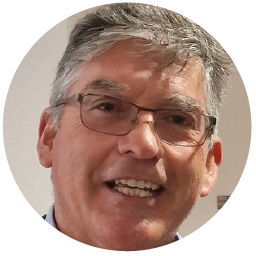
Fabio Paternò
Istituto di Scienza e Tecnologie dell’Informazione “Alessandro Faedo” – ISTI, Italy
Internacional Talk
Democratising Intelligent Ecosystems of People, Objects and Robots
The rapid proliferation of sensors, connected objects, and generative AI is transforming everyday environments into complex, interconnected digital ecosystems, reshaping how we interact with them. While these developments offer promising opportunities to enhance comfort, efficiency, and assistance through smart objects, services, and robots, they also risk creating opaque, centralised, and inaccessible systems that users struggle to understand or control. This talk explores strategies to democratise intelligent ecosystems of people, objects, and robots by making them more transparent, customisable, and inclusive. I will discuss design concepts and interactive tools that aim to support end-user development, interpretable automations, conversational agents, and participatory approaches, in order to empower individuals to adapt the behaviour of connected objects and robotic assistants to their own goals. Through examples and case studies from several projects, the talk will discuss possible approaches that can promote human control and social good across diverse settings, including smart homes and cognitive training for older adults. Overall, the talk aims to stimulate discussion on the key challenges in opening up control over these ecosystems to broader communities and outline a vision for more equitable and human-centred digital futures.